
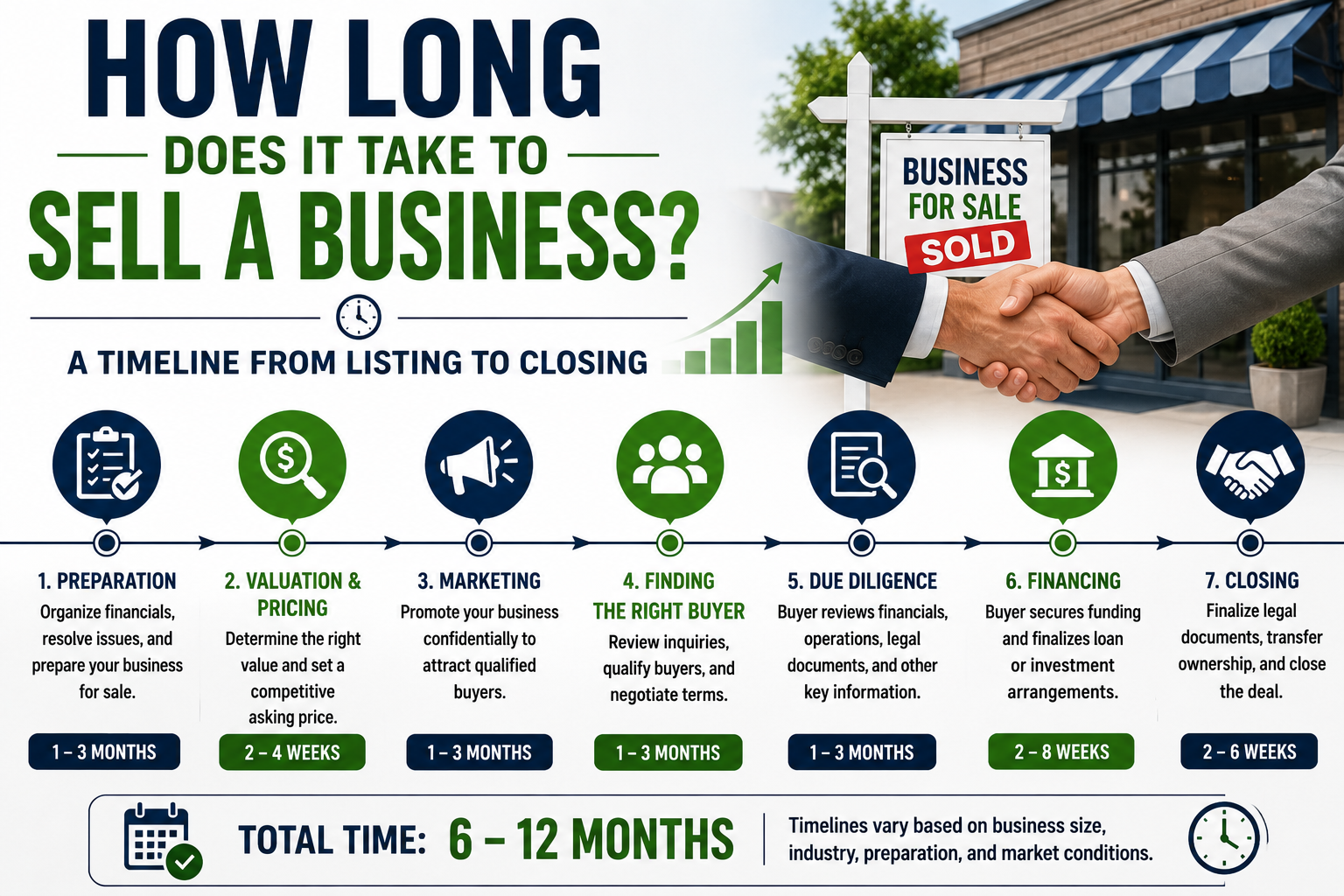
Selling a business is a major milestone that requires careful planning, preparation, and patience. One of the most common questions business owners ask is, "How long does it take to sell a business?" While every transaction is unique, most business sales take six to twelve months from the time the business is listed until the deal officially closes. In some cases, the process may be completed in just a few months, while more complex transactions can take over a year.
The timeline depends on several factors, including the size of the business, industry, financial performance, asking price, market conditions, and the owner's level of preparation. Understanding each stage of the sales process can help you set realistic expectations and avoid unnecessary delays.
Preparing Your Business for Sale
The selling process begins long before the business is listed on the market. Preparation is often the most important stage because it directly affects how attractive the business appears to potential buyers. During this phase, business owners organize financial statements, update operational records, resolve legal issues, improve profitability, and document standard operating procedures.
Well-prepared businesses typically sell faster because buyers have greater confidence in the company's financial health and operational stability. Depending on the condition of the business, this preparation stage can take anywhere from one month to several months.
Determining the Right Asking Price
Setting an appropriate asking price is essential for attracting qualified buyers. Pricing a business too high may discourage interest, while pricing it too low could result in leaving money on the table. Professional business valuations consider revenue, profitability, assets, liabilities, industry trends, market demand, and future growth potential.
A realistic valuation increases the likelihood of receiving offers within a reasonable timeframe and reduces the need for lengthy negotiations later in the process.
Marketing the Business
Once the business is ready for sale, it is marketed to potential buyers through business brokers, online marketplaces, professional networks, and confidential marketing campaigns. During this stage, interested buyers review preliminary information and determine whether the opportunity matches their investment goals.
For businesses with strong financial performance and desirable market positions, buyer inquiries may begin within a few weeks. However, businesses in specialized industries or higher price ranges may take longer to attract qualified prospects.
Finding the Right Buyer
Finding the right buyer often requires patience. While receiving inquiries is relatively common, identifying a buyer who is financially qualified, genuinely interested, and capable of completing the purchase can take several months.
During this stage, sellers typically participate in meetings, answer buyer questions, provide additional documentation, and negotiate preliminary terms. Buyers may also be required to sign confidentiality agreements before receiving detailed financial information.
Due Diligence
Once both parties agree on the basic terms of the sale, the buyer enters the due diligence phase. This is one of the longest and most detailed stages of the transaction. Buyers carefully review financial records, tax returns, contracts, customer relationships, employee information, legal documents, leases, licenses, and operational procedures.
Depending on the complexity of the business, due diligence usually takes between 30 and 90 days. Businesses with organized records and transparent financial reporting often complete this stage more quickly.
Financing the Purchase
Many buyers rely on financing to complete a business acquisition. Whether through traditional bank loans, Small Business Administration (SBA) loans, private investors, or seller financing, obtaining funding can add several weeks to the timeline.
Loan approvals require lenders to review both the buyer's qualifications and the business itself. If financing is delayed, the overall closing process may also be extended.
Closing the Sale
After due diligence is complete and financing has been approved, attorneys prepare the final purchase agreements and legal transfer documents. The closing process includes transferring ownership, licenses, permits, contracts, and business assets according to the terms negotiated by both parties.
Most closings are completed within a few weeks after all conditions have been satisfied. At this point, ownership officially transfers to the buyer, and any agreed-upon transition period begins.
Factors That Affect the Timeline
Several factors influence how quickly a business sells. Businesses with consistent profitability, organized financial records, diversified customer bases, and documented operating procedures generally attract buyers more quickly. Strong market demand within your industry can also shorten the selling timeline.
On the other hand, businesses experiencing declining revenue, legal disputes, outdated financial records, or heavy dependence on the owner may require additional time to secure a qualified buyer. Pricing also plays a significant role. Overpriced businesses often remain on the market much longer than those priced according to current market value.
Economic conditions, interest rates, and buyer confidence can also impact how long it takes to complete a transaction. During periods of economic uncertainty, financing may become more difficult to obtain, increasing the overall timeline.
How to Sell Your Business Faster
Although no one can guarantee a quick sale, there are several ways to improve your chances of completing a transaction more efficiently. Preparing accurate financial records, maintaining consistent profitability, resolving legal issues, documenting business operations, and improving your company's overall appearance all help build buyer confidence.
Working with an experienced business broker can also significantly reduce the time required to find qualified buyers and negotiate favorable terms. Brokers understand current market conditions, maintain buyer networks, and help manage the entire sales process from listing to closing.
Why Patience Is Important
Selling a business is not simply about finding someone willing to buy. The goal is to find the right buyer who recognizes the value of your business and has the financial resources to complete the purchase successfully. Rushing the process may result in accepting a lower offer or overlooking important legal and financial details.
Taking the time to properly prepare your business, market it effectively, and negotiate carefully often leads to a smoother transaction and a more favorable outcome.
Final Thoughts
The time it takes to sell a business varies depending on numerous factors, but most business owners should expect the process to take six to twelve months from preparation to closing. Businesses that are financially healthy, properly valued, and professionally presented often sell more quickly than those requiring significant improvements.
By planning ahead, organizing your records, and working with experienced professionals, you can position your business for a successful sale while maximizing its value and minimizing unnecessary delays.
Frequently Asked Questions (FAQs)
How long does it usually take to sell a business?
Most businesses sell within six to twelve months, although smaller businesses with strong financial performance may sell more quickly. Larger or more complex businesses can take over a year to complete the sales process.
What is the biggest factor affecting the sale timeline?
Preparation is one of the most important factors. Businesses with organized financial records, strong profitability, and clear operational procedures generally attract buyers faster and move through due diligence more efficiently.
Can I sell my business in less than six months?
Yes. Some businesses sell within a few months if they are priced correctly, located in high-demand industries, and marketed effectively to qualified buyers. However, shorter timelines are not guaranteed.
Why does due diligence take so long?
Due diligence involves a comprehensive review of financial statements, tax records, legal documents, contracts, customer information, employee records, and business operations. Buyers use this process to verify the business's value and identify potential risks before completing the purchase.
Does hiring a business broker speed up the process?
In many cases, yes. Experienced business brokers have access to qualified buyers, understand pricing strategies, manage negotiations, and coordinate documentation, helping reduce delays throughout the sales process.
What can delay the sale of a business?
Common causes of delays include unrealistic asking prices, incomplete financial records, unresolved legal issues, financing challenges, poor business performance, and lengthy negotiations between buyers and sellers.
Should I continue running my business during the sale process?
Absolutely. Maintaining strong financial performance, excellent customer service, and normal business operations is essential while the business is listed for sale. Buyers expect to see continued stability until ownership officially transfers.