
Selling a business is one of the most important financial decisions an owner can make. After years of building revenue, developing customer relationships, hiring employees, and creating a valuable operation, deciding how to sell that business deserves careful consideration.
One of the first questions owners face is whether they should handle the sale themselves or hire a professional business broker. Selling independently may appear attractive because it can reduce professional fees and give the owner direct control over the process. On the other hand, a qualified broker can provide valuation guidance, buyer sourcing, negotiation experience, transaction management, and support throughout the sale.
There is no universal answer. The better choice depends on the size and complexity of the business, the owner's experience, available time, desired level of confidentiality, and ability to manage negotiations objectively.
What Does Selling a Business Yourself Involve?
Selling a business yourself, sometimes called a for-sale-by-owner approach, means the owner manages most or all of the transaction process. This can include determining an asking price, preparing financial information, creating marketing materials, identifying potential buyers, handling inquiries, negotiating terms, coordinating due diligence, and working with attorneys and accountants.
An owner who chooses this route has greater direct control over how the business is presented and who receives information. However, the owner also takes responsibility for coordinating a process that can become complicated as the transaction progresses.
Selling a business is different from selling a typical piece of personal property. Buyers may request detailed financial records, contracts, customer information, employee data, tax documents, operational information, and other materials before completing the transaction.
What Does a Business Broker Do?
A business broker acts as an intermediary between a business owner and prospective buyers. Depending on the broker and transaction, their services may include business valuation, marketing, buyer screening, negotiations, due diligence coordination, and assistance with closing.
A broker can also help organize the sale process so that the owner can continue focusing on running the company. This can be particularly valuable when the business requires significant owner attention.
The exact services and fee structure vary between brokers, so owners should understand what is included before signing an engagement agreement.
The Cost of Selling a Business
One of the biggest reasons owners consider selling without a broker is cost. A business broker typically charges a fee or commission, often based on the transaction value or structured according to the engagement agreement.
Selling independently may eliminate or reduce that particular expense. However, avoiding a broker does not necessarily mean avoiding transaction costs. Owners may still need attorneys, accountants, valuation professionals, tax advisors, or other specialists.
The more important question is therefore not simply, "How much does a broker cost?" but rather, "Can professional assistance increase the net value or reduce the risk of the transaction enough to justify the cost?"
Business Valuation Is More Complicated Than It Looks
One of the most important parts of selling a business is determining an appropriate valuation. Owners naturally have an emotional connection to companies they have spent years building, which can sometimes lead to unrealistic expectations about what a buyer will pay.
A business valuation can consider profitability, cash flow, assets, growth prospects, industry conditions, customer concentration, management structure, recurring revenue, competitive advantages, and comparable transactions.
A broker with relevant market experience may provide useful insight into how buyers are likely to view the business. Owners selling independently should be prepared to conduct significant research and potentially seek an independent valuation.
The Risk of Overpricing Your Business
An owner may believe that setting a high asking price creates room for negotiation. In reality, an unrealistic valuation can discourage serious buyers.
Businesses that remain on the market for a long time may begin to attract questions about why they have not sold. Buyers may become concerned about financial performance, operational problems, or unrealistic seller expectations.
A well-supported asking price can create a stronger starting point for negotiations. Whether the owner uses a broker or sells independently, pricing should be based on defensible financial and market information.
Finding Qualified Buyers
Finding potential buyers can be one of the biggest challenges of a private business sale. Owners may know people within their industry, but that does not necessarily mean those contacts are qualified or interested in acquiring the company.
Business brokers may have established buyer networks and access to potential strategic buyers, entrepreneurs, investors, and other acquisition groups. They can also screen prospects before disclosing sensitive business information.
An owner selling independently may need to develop their own buyer-sourcing strategy. This can involve industry contacts, professional networks, targeted outreach, online listings, or other channels.
Maintaining Confidentiality
Confidentiality can be extremely important during a business sale. Employees, customers, competitors, suppliers, and lenders may react differently if they learn that a company is being sold.
A poorly managed disclosure can create uncertainty among employees or customers and potentially affect business performance before a transaction closes.
Professional brokers commonly use confidentiality agreements and structured information-sharing processes. Owners selling independently need to be equally careful about determining who receives information and when.
Negotiating the Purchase Price
The purchase price is only one part of a business transaction. Deal structure can be equally important.
A buyer may propose a combination of cash at closing, seller financing, an earnout, rollover equity, working-capital adjustments, or other terms. These structures can significantly affect the owner's actual financial outcome and future obligations.
An experienced broker can help an owner understand the commercial implications of different proposals. Owners selling independently should work closely with qualified legal and financial advisors before accepting or rejecting complex deal terms.
Emotional Distance Can Matter
Selling a business can be emotionally challenging. Owners may have spent decades building the company and can understandably have strong feelings about its value and future.
Those emotions can make negotiations difficult. A buyer may criticize aspects of the business as part of the negotiation process, even when they genuinely like the company.
A broker can provide some separation between the owner and buyer, allowing the broker to handle difficult conversations while the owner focuses on the broader transaction.
How Much Time Does Selling a Business Take?
A business sale can consume substantial time. Preparing financial records, responding to buyer questions, arranging meetings, reviewing offers, coordinating due diligence, and negotiating terms can become a significant workload.
This can be particularly challenging for owners who are still responsible for running the company.
A broker can take responsibility for many of these tasks, potentially allowing the owner and management team to remain focused on maintaining business performance. This can be important because a decline in revenue or profitability during the sale process could negatively affect buyer confidence and valuation.
Due Diligence Can Be Extensive
Once a serious buyer makes an offer, the transaction often enters a detailed due-diligence process. Buyers and their advisors may examine financial statements, tax returns, contracts, employees, intellectual property, insurance, legal matters, customer relationships, assets, liabilities, and operational practices.
Owners need to prepare accurate documentation and respond efficiently to requests. Delays or inconsistencies can create concerns for buyers and potentially slow down or jeopardize the transaction.
A broker can help organize communication and keep the process moving, although legal and accounting professionals remain important for specialized diligence and documentation.
When Selling Your Business Yourself May Make Sense
Selling independently may make sense for an owner who has transaction experience, understands business valuation, has access to potential buyers, and has enough time to manage the process.
It may also be reasonable when the business is relatively straightforward and the owner already has a strong relationship with a likely buyer. For example, a strategic buyer within the owner's industry may already understand the business and have a clear reason for acquiring it.
Even in these situations, professional legal, tax, and accounting advice is generally important before finalizing a transaction.
When Hiring a Broker May Make More Sense
A broker may be particularly useful when the owner has limited experience selling businesses, wants access to a larger buyer pool, needs help establishing market value, or wants to maintain greater confidentiality.
Professional assistance can also be valuable when the transaction is complex or when the owner does not have enough time to manage the sale while continuing to operate the company.
For larger or more complicated transactions, owners may also need investment banking or specialized M&A advisory services rather than a traditional small-business broker.
How a Broker Can Help Maximize Value
A broker cannot guarantee a higher sale price, but professional preparation and competitive buyer outreach may improve the owner's negotiating position.
A broker can help present the company's financial performance clearly, identify potential buyers, create competitive interest, and manage negotiations. Having multiple qualified buyers can potentially provide greater leverage than negotiating with a single interested party.
However, the quality of the broker matters. Owners should evaluate relevant experience, transaction history, buyer network, marketing approach, communication style, and fee structure before hiring one.
What Questions Should You Ask a Business Broker?
Before hiring a broker, owners should ask how many businesses they have sold, how many transactions they have completed in the owner's industry, what types of buyers they typically work with, how they determine valuation, and how they market businesses.
It is also important to understand their fee structure, contract length, exclusivity requirements, marketing expenses, confidentiality procedures, and responsibilities throughout due diligence and closing.
Speaking with previous clients can provide useful insight into the broker's communication, professionalism, and ability to complete transactions.
Do You Still Need an Attorney If You Use a Broker?
Yes. A business broker and an attorney serve different roles. A broker typically focuses on the commercial side of the transaction, while an attorney can advise on legal documents, purchase agreements, representations and warranties, liabilities, closing conditions, and other legal matters.
An accountant or tax advisor can also help evaluate the tax consequences of the transaction and review financial information.
Using a broker does not replace the need for qualified legal and financial advice.
How Taxes Can Affect Your Sale
The amount an owner ultimately keeps from a business sale depends on more than the headline purchase price. Taxes can have a significant effect on net proceeds, and the tax treatment can vary depending on the structure of the transaction and the nature of the business and its assets.
Owners should consult a qualified tax professional well before accepting an offer. Tax planning can influence decisions about deal structure and timing, and addressing these issues late in the process may limit available options.
The Importance of Preparing Before Listing
Whether you sell independently or hire a broker, preparation can significantly influence the quality of the sale process.
Owners should organize financial statements, tax records, contracts, employee information, customer data, operating procedures, intellectual property documentation, and other relevant materials. They should also identify potential weaknesses that a buyer may discover during due diligence.
A clean, well-documented business is generally easier for a buyer to understand and evaluate.
Broker vs. Selling Yourself: Which Is Better?
Selling a business yourself can provide greater control and may reduce broker commissions. It can work well for experienced owners with strong buyer networks, sufficient time, and a straightforward transaction.
Hiring a broker adds a professional fee but can provide valuable expertise, buyer access, negotiation support, confidentiality management, and transaction coordination.
For many owners, the decision comes down to whether they want to spend their time learning and managing the sale process or pay an experienced professional to handle much of that work.
A Hybrid Approach May Be an Option
Business owners do not always have to choose between handling everything themselves and handing everything to a broker. A hybrid approach can involve managing certain aspects internally while hiring professionals for specialized tasks.
For example, an owner might identify potential strategic buyers personally while engaging an attorney for legal documentation and an accountant for tax planning. Another option is to hire a valuation professional before deciding whether a broker is necessary.
The appropriate combination depends on the size and complexity of the transaction.
Final Thoughts
Deciding whether to sell your business yourself or hire a broker is ultimately a question of cost, expertise, time, control, and transaction complexity.
Selling independently can work for knowledgeable owners who have the right buyer relationships and are comfortable managing negotiations and due diligence. Hiring a broker can make sense when an owner wants professional guidance, broader buyer exposure, confidentiality support, and help managing the transaction.
Regardless of the approach, business owners should avoid treating the sale as a simple one-step transaction. Proper valuation, preparation, buyer screening, negotiation, due diligence, legal review, and tax planning can all have a significant impact on the final outcome.
The goal should not simply be to sell the business. It should be to complete a well-structured transaction that protects the owner's interests and maximizes the value created over years of hard work.
Frequently Asked Questions
Is it better to sell a business yourself or use a broker?
There is no universal answer. Selling independently may save broker fees and provide more control, while a broker can provide valuation expertise, buyer access, negotiation support, and transaction management. The best choice depends on the owner's experience, time, business complexity, and goals.
How much does a business broker charge?
Broker fees vary based on the broker, business size, transaction value, services provided, and engagement structure. Owners should request a clear explanation of all commissions, retainers, marketing expenses, and other potential costs before signing an agreement.
Can I sell my business without a broker?
Yes. Business owners can sell independently, but they remain responsible for finding buyers, determining an asking price, managing confidentiality, negotiating terms, coordinating due diligence, and working with legal and financial professionals.
Does hiring a broker guarantee a higher sale price?
No. A broker cannot guarantee a particular sale price. However, experienced brokers may help improve the sales process through accurate valuation, buyer sourcing, competitive positioning, and negotiation expertise.
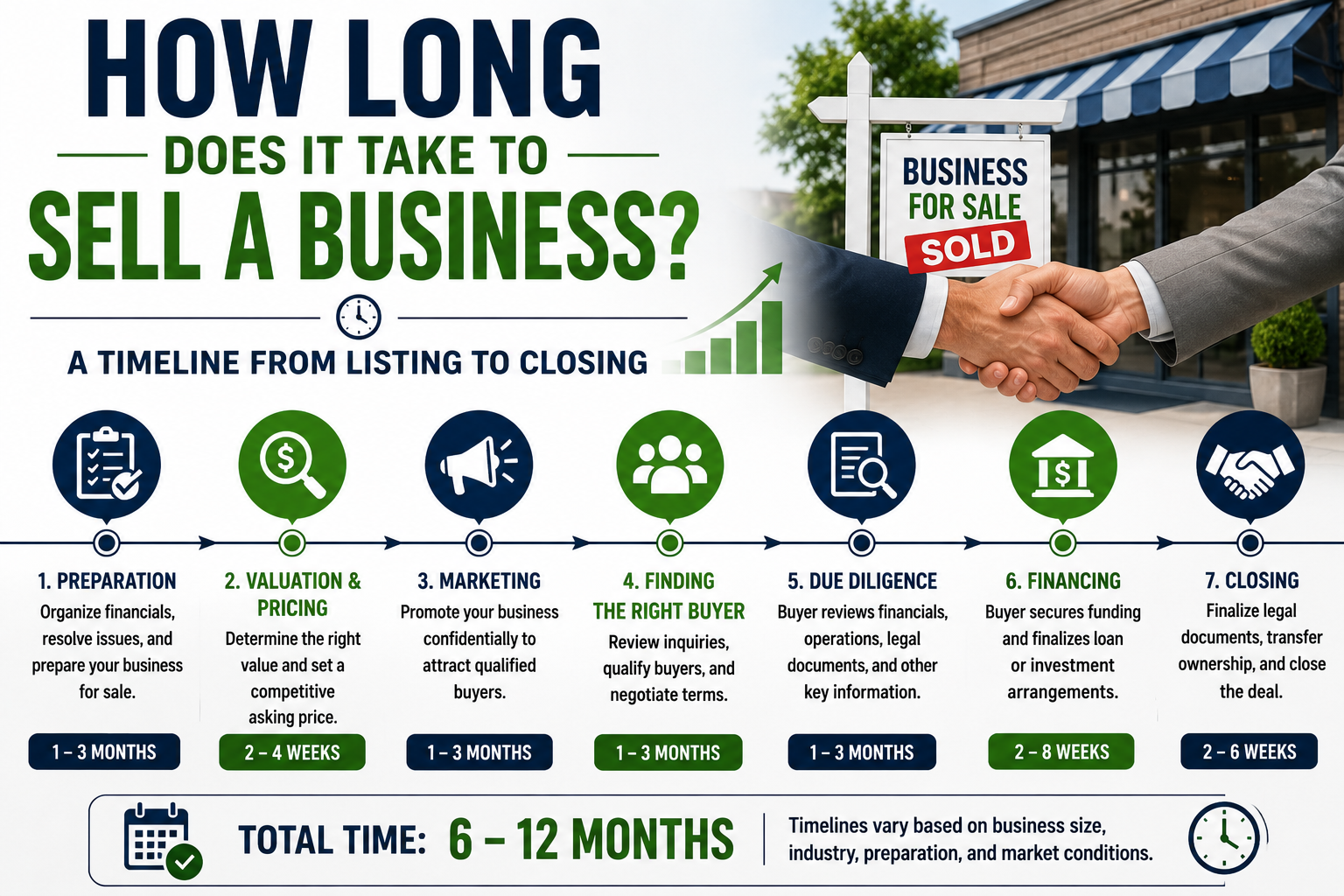
How long does it take to sell a business?
The timeline varies considerably. Factors such as business size, buyer demand, financial complexity, valuation, due diligence, financing, negotiations, and legal documentation can all affect how long a transaction takes.
How do I find buyers for my business?
Potential buyers can come from strategic competitors, entrepreneurs, investors, existing business contacts, industry networks, and professional acquisition groups. Brokers may also have established buyer databases and networks that can expand the pool of potential purchasers.
Should I tell my employees that I am selling my business?
There is no single approach that works for every business. Confidentiality can be important, and premature disclosure may create uncertainty. Owners should discuss the timing and communication strategy with their legal and financial advisors based on the circumstances of the transaction.
Do I need an attorney to sell my business?
It is generally advisable to have qualified legal counsel review and negotiate the legal documents involved in a business sale. Attorneys can help address purchase agreements, representations, warranties, liabilities, closing conditions, and other legal issues.
Do I need an accountant when selling my business?
An accountant or tax advisor can help review financial information, evaluate tax consequences, prepare financial documentation, and advise on transaction structure. Their involvement can be particularly important when the sale has significant tax implications.
How do I choose the right business broker?
Look for a broker with relevant industry experience, a strong transaction history, appropriate buyer relationships, clear communication, and a transparent fee structure. Ask for references and understand exactly what services the broker will provide.
What is the biggest advantage of selling a business yourself?
The biggest advantages can include greater control over the process, direct communication with buyers, and potentially lower professional fees. However, these benefits need to be weighed against the time and expertise required to manage the transaction.
What is the biggest advantage of hiring a business broker?
A broker can take much of the transaction workload off the owner's shoulders while providing experience in valuation, buyer sourcing, marketing, negotiations, confidentiality, and deal coordination. This can be particularly valuable when the owner is still running the business.